CnAii2627 - Residência A - Ferdinand Meier
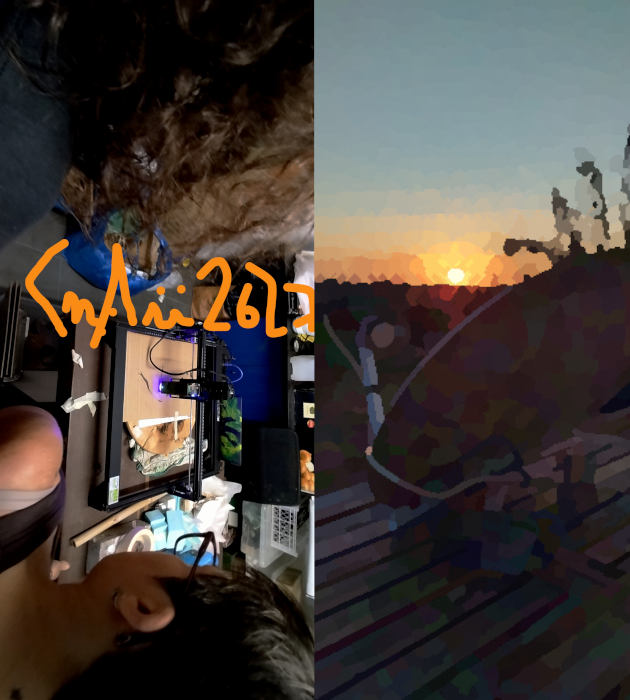
Residência A, do ciclo CnAii2627, com Ferdinand Meier. Calcular na Areia é um ciclo de residências de investigação e criação em artes eco-tecnológicas, electrónicas, digitais, biológicas ou tradicionais e experimentais, que origina exposições, oficinas, eventos e obras colectivas. É um projecto em arte-ciência que visa criar cultura actual e atracções públicas em artes eco-tecnológicas e resilientes, interligando novos meios artísticos e/ou tradicionais, associados à estética e algoritmia, reflectindo simultaneamente na preservação e resiliência ecológica e tecnológica.
Published on September 21, 2026 by artecódigo
ArteCódigo CnAii2627 calcular na areia ii ArteCódigo LXYS ArteCódigo SRAM MILL Ferdinand Meier André Sier Owari Stray Patrícia Nazaré Barbosa Mecra António Olaio
11 min READ
Residência A, do ciclo CnAii2627, com
Ferdinand Meier
Leia em Português: PT. Read in English: EN.
Media, Imagens: MEDIA.
◟◖◕▽▮▂▫◺▴◈▇◻◫▱▨▖◱◔▸◑▏▾▃▢▜◅

de▲cada◉volta◮no◾ciclo▅temporal,▅cada▶vez◀mais

▉▐▽▝▀◶▀◬▸▔▋▰▎▸▅▼▤▴▇▒▕◱◝▾◸◓

ecoresiliente.

◩▗◂◸◴▸◆◬▫▹▝◇◹◷▢◑◩▤◞▔◘▵▸◅▴▖

Servia,◇e◱serve,◐primordialmente,▢para▯cálculos

▴◚◎▿◩◡◊◿░□◇◅◱▻█◱▐▼▅▝◉▢▘▿▹▻

contabilísticos▓e◻trocas▥comerciais,◬mas◁também

- Saiba mais aqui.
Residência A, Ferdinand Meier,
integrada no ciclo CnAii2627.
Ao longo desta segunda edição, o engenheiro, fabmaster e mestre de sistemas de energias renováveis Ferdinand Meier participa no ciclo Calcular na Areia II através de duas residências criativas e exploratórias de integração de tecnologias de fabricação maquinal com a sua práctica de criar máquinas, sistemas de electrónicos e de fabricação, aplicados sobretudo à escultura.
De 21 de Setembro a 10 de Outubro Ferdinand Meier esteve a residir na ArteCódigo LXYS e ArteCódigo SRAM, a desenvolver projectos de fabricação digital e construção maquinal, a investigar processos ecoresilientes e simples, tais como fogões a partir de latas de cerveja, mecanismos de enrolamento sem fim, testar misturas de pastas para esculpir, prototipagem de carimbos, e com um simples tutorial, já controlava a nossa cortadora laser como poucos o conseguirão fazer. São processos e mecanismos no espírito do texto fundador do ciclo, da práctica de calcular na areia, colocando em andamento processos complexos mecânicos e electrónicos a partir de elementos simples e triviais. Quando as máquinas funcionaram, muitas esculturas começaram a sair da cabeça de extrusão, e também revivalismo de ideias artísticas interessantes, como a sua obra um cagalhão do Ferdi, que retoma o espírito de Manzoni (1961).
Ferdinand Meier usou meios simples aumentados com máquinas, tornou meios simples em máquinas e instrumentos de trabalho, criou pastas para esculpir, mediu percentagens e processos, desenhou, esculpiu, e apagou, na areia.
O engenheiro, fabmaster e mestre apresentou já trabalhos em exposição na galeria p0ntus, no âmbito da exposição CnAii2627(‘ ‘, a, b), e encontra-se activamente a desenvolver ideias de prolongamentos estéticos e maquínicos, que verão a luz em exposições futuras no âmbito do ciclo CnAii2627.
Um cagalhão do Ferdi, Ferdinand Meier, 2026. Escultura impressa em barro vermelho, 10x3x2cm.
Um cagalhão do Ferdi, Ferdinand Meier, 2026. Escultura impressa em barro vermelho, 10x6x4cm.
Um cagalhão do Ferdi, Ferdinand Meier, 2026. Escultura impressa em barro vermelho, 10x3x2cm.
Ashtray, Owari Stray e Ferdinand Meier, 2026. Escultura impressa em barro vermelho, 13x11x6.7cm.
Ashtray, Owari Stray e Ferdinand Meier, 2026. Escultura impressa em barro vermelho, 13x11x6.7cm.
Copo, Ferdinand Meier, 2026. Escultura impressa em barro vermelho, 8x7x9.5cm.
AndreasMass_Blossom_Vase_MildTwist.stl, Andreas Mass e Ferdinand Meier, 2026. Escultura impressa em barro vermelho, 12x11.5x12.5cm.
AndreasMass_Blossom_Vase_MildTwist.stl, Andreas Mass e Ferdinand Meier, 2026. Escultura impressa em barro vermelho, 11x11x8.4cm.
AndreasMass_Blossom_Vase_MildTwist.stl, Andreas Mass e Ferdinand Meier, 2026. Escultura impressa em barro vermelho, 12.5x13x6.5cm.
Círculo, Ferdinand Meier, 2026. Escultura impressa em barro vermelho, 8.5x8.5x1cm.
Logotipo ArteCódigo, ArteCódigo e Ferdinand Meier, 2026. Escultura impressa em barro vermelho, 10x5x2cm.
Vaso, Ferdinand Meier, 2026. Escultura impressa em barro vermelho, 9x9x10cm.
Cabeça (a partir de Avatar Human Head 1/6 Scale), TheNewBloodDan, Ferdinand Meier e António Olaio, 2026. Escultura impressa em barro vermelho, 8.5x8.5x9.5cm.
Pode ver imagens da residência e dos trabalhos desenvolvidos na secção MEDIA desta publicação. Reproduzimos de seguida um relato de Ferdinand Meier, desta sua primeira série de residências Calcular na Areia II.
A residência em Santarém foi uma experiência ótima. Gostei muito de trabalhar com o António Olaio: entendemo-nos muito bem, e é fácil perceber que é um artista experiente, com uma grande vontade de se expressar.
Também foi muito bom trabalhar com o Owari. Espero que a sua mistura de pintura e luz chegue longe e tenha muito sucesso!
Passei a maior parte do tempo com a impressora 3D de barro. Não foi fácil encontrar a proporção certa de água e barro. Se o barro estiver demasiado duro, entope a impressora e esta não imprime nada. Se a proporção de água for demasiado elevada, o barro fica tão mole que tudo desmorona por si só. Mas também houve outros momentos criativos, como o fogão a álcool feito por mim ou a bola flutuante com pressão de ar.
Passei a maior parte do tempo com a impressora 3D de barro. Não foi fácil encontrar a proporção certa de água e barro. Se o barro estiver demasiado duro, entope a impressora e esta não imprime nada. Se a proporção de água for demasiado elevada, o barro fica tão mole que tudo desmorona por si só.
Encher o cartucho sem deixar nenhuma bolha de ar foi outro desafio. Formar pequenas bolinhas e bater com o cartucho no chão, protegido por uma lata de refrigerante, revelou-se uma boa solução.
Mas também houve outros momentos criativos, como o fogão a álcool feito à mão ou a bola flutuante movida a pressão de ar.
** folha de sala \
- Um cagalhão do Ferdi - sem comentário… Inspirado em «Merda d’artista», de Piero Manzoni. \
- Copo — Este copo foi inspirado na chávena de café que estava na minha mesa e modelado no Blender.\
- AndreasMass_Blossom_Vase_MildTwist — Impressão 3D de um modelo conhecido, disponível no Thingiverse.\
- Círculo — O círculo que a impressora imprimiu à volta de «Copo».\
- Logotipo ArteCódigo — O logótipo foi bastante trabalhado no Inkscape para se tornar imprimível. Depois, passou pelo Blender e pelo PrusaSlicer.\
- Cabeça (a partir de «Avatar Human Head 1/6 Scale», de TheNewBloodDan) — Este modelo parte de um ficheiro STL de TheNewBloodDan. No Blender, acrescentei-lhe uma base e um orifício para colocar uma vela. Mas o maior contributo foi o trabalho de pós-produção do António.
(Ferdinand Meier, Residência A, Calcular na Areia II)
A Residence, Ferdinand Meier,
integrated in the cycle CoSii2627.
Throughout this second edition, engineer, fab-master, and renewable energy systems expert Ferdinand Meier participates in the “Calculating in the Sand II” (Calcular na Areia II) series through two creative, exploratory residencies. These residencies focus on integrating machine-based fabrication technologies into his practice—a practice centered on creating machines, electronic systems, and manufacturing tools, primarily applied to sculpture.
From September 21 to October 10, Ferdinand Meier was in residence at ArteCódigo LXYS and ArteCódigo SRAM, where he developed projects in digital fabrication and machine construction. He investigated simple, eco-resilient processes—such as crafting stoves from beer cans, building endless-loop winding mechanisms, testing sculpting paste mixtures, and prototyping stamps. With the help of just a single tutorial, he mastered the operation of our laser cutter to a degree few others could achieve. These processes and mechanisms embody the spirit of the series’ foundational text — the practice of “calculating on sand” — by setting complex mechanical and electronic systems into motion using simple, trivial elements. Once the machines were operational, various sculptures began to emerge from the extrusion head. This also sparked a revival of intriguing artistic concepts, such as his piece Um Cagalhão do Ferdi (“Ferdi’s Turd”), which echoes the spirit of Manzoni (1961).
Ferdinand Meier utilized simple means augmented by machinery, transformed simple elements into machines and working tools, formulated sculpting pastes, measured ratios and processes, and — in the spirit of “calculating on sand” — he designed, sculpted, and erased.
The engineer, fabmaster, and master has previously presented work at the p0ntus gallery, as part of the exhibition CnAii2627(‘ ‘, a, b). He is currently actively developing ideas for aesthetic and machine-based extensions, which will be unveiled in future exhibitions within the CnAii2627 cycle.
Ferdi’s Turd, Ferdinand Meier, 2026. Sculpture printed in red clay, 10x3x2cm.
Ferdi’s Turd, Ferdinand Meier, 2026. Sculpture printed in red clay, 10x6x4cm.
Ferdi’s Turd, Ferdinand Meier, 2026. Sculpture printed in red clay, 10x3x2cm.
Ashtray, Owari Stray and Ferdinand Meier, 2026. Sculpture printed in red clay, 13x11x6.7cm.
Ashtray, Owari Stray and Ferdinand Meier, 2026. Sculpture printed in red clay, 13x11x6.7cm.
Cup, Ferdinand Meier, 2026. Sculpture printed in red clay, 8x7x9.5cm.
AndreasMass_Blossom_Vase_MildTwist.stl, Andreas Mass and Ferdinand Meier, 2026. Sculpture printed in red clay, 12x11.5x12.5cm.
AndreasMass_Blossom_Vase_MildTwist.stl, Andreas Mass and Ferdinand Meier, 2026. Sculpture printed in red clay, 11x11x8.4cm.
AndreasMass_Blossom_Vase_MildTwist.stl, Andreas Mass and Ferdinand Meier, 2026. Sculpture printed in red clay, 12.5x13x6.5cm.
Circle, Ferdinand Meier, 2026. Sculpture printed in red clay, 8.5x8.5x1cm.
ArteCódigo Logo, ArteCódigo and Ferdinand Meier, 2026. Sculpture printed in red clay, 10x5x2cm.
Vase, Ferdinand Meier, 2026. Sculpture printed in red clay, 9x9x10cm.
Head (based on “Avatar Human Head 1/6 Scale”), TheNewBloodDan, Ferdinand Meier, and António Olaio, 2026. Sculpture printed in red clay, 8.5x8.5x9.5cm.
You can view images of the residency and the works produced in the MEDIA section of this publication. Below, we share an account from Ferdinand Meier regarding his first residency series, Calculate on Sand II (Calcular na Areia II).
The residency in Santarém was a fantastic experience. I really enjoyed working with António Olaio; we understood each other very well, and it is easy to see that he is an experienced artist with a strong desire to express himself.
It was also great working with Owari. I hope his blend of painting and light goes far and meets with great success!
I spent most of my time working with the 3D clay printer. Finding the right ratio of water to clay was not easy. If the clay is too stiff, it clogs the printer, and nothing gets printed. If the water content is too high, the clay becomes so soft that everything collapses under its own weight. However, there were other creative moments as well—such as the alcohol stove I built, or the floating ball suspended by air pressure.
I spent most of my time working with the 3D clay printer. Finding the right ratio of water and clay was not easy. If the clay is too stiff, it clogs the printer, and nothing gets printed. If the water content is too high, the clay becomes so soft that everything collapses under its own weight.
Filling the cartridge without leaving any air bubbles was another challenge. Forming small, compact masses and tapping the cartridge against the floor—while cushioned by a soda can—proved to be an effective solution.
There were other creative moments, too, such as a handmade alcohol stove and a floating ball powered by air pressure.
** Exhibition Sheet
\
- A turd by Ferdi — no comment… Inspired by Piero Manzoni’s “Artist’s Shit” (Merda d’artista). \
- Cup — Inspired by a coffee mug on my desk and modeled in Blender. \
- AndreasMass_Blossom_Vase_MildTwist — A 3D print of a well-known model, available on Thingiverse. \
- Circle — The circle printed by the machine around the “Cup.” \
- ArteCódigo Logo — The logo required significant refinement in Inkscape to make it printable; it was then processed through Blender and PrusaSlicer. \
- Head (from “Avatar Human Head 1/6 Scale” by TheNewBloodDan) — Based on an STL file by TheNewBloodDan. I added a base and a hole in Blender to accommodate a candle. However, the most significant contribution was the post-production work done by António.
(Ferdinand Meier, Residency A, Calcule na Areia II)