CnAii2627 - Residência B - António Olaio
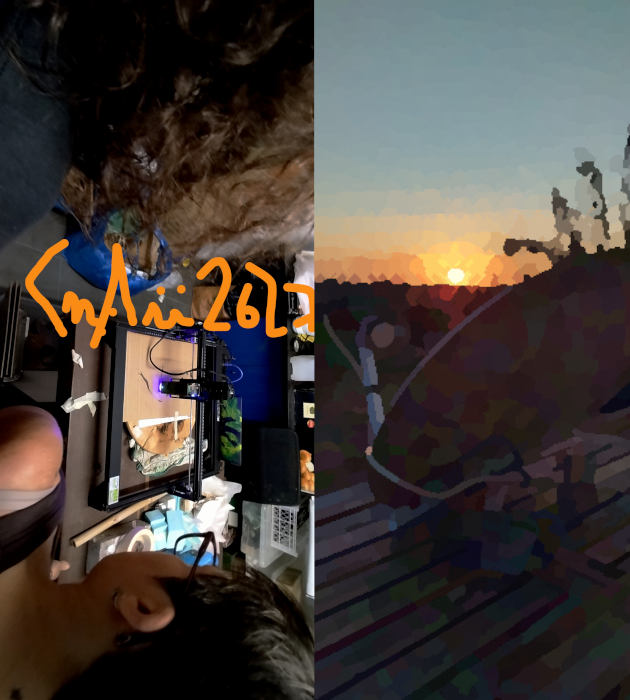
Residência B, do ciclo CnAii2627, com António Olaio. Calcular na Areia é um ciclo de residências de investigação e criação em artes eco-tecnológicas, electrónicas, digitais, biológicas ou tradicionais e experimentais, que origina exposições, oficinas, eventos e obras colectivas. É um projecto em arte-ciência que visa criar cultura actual e atracções públicas em artes eco-tecnológicas e resilientes, interligando novos meios artísticos e/ou tradicionais, associados à estética e algoritmia, reflectindo simultaneamente na preservação e resiliência ecológica e tecnológica.
Published on September 27, 2026 by artecódigo
ArteCódigo CnAii2627 calcular na areia ii ArteCódigo SRAM António Olaio André Sier Ferdinand Meier Patrícia Nazaré Barbosa Owari Stray
10 min READ
Residência B, do ciclo CnAii2627, com
António Olaio
Leia em Português: PT. Read in English: EN.
Media, Imagens: MEDIA.
◟◷◃▿◻▎◖▙◲◂▞◞◙▀◣◳▴●▮◱▓▣◐▫▨░

números,▶caractéres,◸operações◵e▍procedimentos,

▧▚◻■▟◚◞▛▥◗◢◼◵█◛◊◶▋▏▚▏◯◣░▛◔

utilizando▢a◨areia◳como▘suporte▲efémero◳e◢abundante

▌▖◵◦◶▏▂▹▶◯▿▌▘▝◊□▁▇◎▌▄▔◾▒▣

para▩os▯cálculos.

◷▻◛◜▇▝▔▦△▗◤▼◕◽◸◵■◴◬▐░▍▥◻►◛

Era,◹e◲é▕ainda,▛uma▬computação◿manual,△integrada◤no

▃◂▇◍▞▜□◆◶◎◈◟◖◹▊▿◫◎◒◚▹▰▋▼◯◆

ambiente.▚Uma◠tecnologia▋ambiental◙de◙pegada◫nula,

- Saiba mais aqui.
Residência B, António Olaio,
integrada no ciclo CnAii2627.
Ao longo desta segunda edição, o artista visual, músico, professor e investigador António Olaio participa no ciclo Calcular na Areia II através de duas residências criativas e exploratórias de integração de tecnologias de fabricação maquinal com a sua práctica de desenho, escultura e de instalação.
Além de uma das suas músicas - Where Paris used to be -, composta com Victor Torpedo, ter sido banda sonora principal de publicações nas redes sobre a inauguração da galeria p0ntus, e da primeira exposição CnAii2627, o artista e músico António Olaio, nesta edição do ciclo CnAii2627, cruza ideias de desenho, de escultura, de memória e de esquecimento, em torno do texto motivacional do ciclo, particularmente sobre o acto de desenhar na areia, de o fixar, de o apagar e de o refazer, de o esquecer, e de o voltar a desenhar, de o exercitar e redesenhar continuadamente.
António Olaio usou meios simples aumentados com máquinas, o lápis de carvão sobre papel, o laser sobre papel, a areia como suporte efémero, também sobre papel. Partindo assim da fugacidade da memória e do esquecimento, realizando desenhos da forma mais simples possível, com recurso a matrizes digitais e maquinais gravadas a laser, onde inscrevia a matriz inicial e o título, onde a própria máquina se esquecia de o desenhar completamente, deixando caracteres com zonas esquecidas, mas também lembradas. Neles posteriormente intervém com carvão e com areia, fixando resultados, esquecendo e lembrando. Exercícios que ginasticou também em esculturas manuais, matinais, com pasta de modelar, e com areia, negra, das profundezas da memória e do esquecimento.
O artista, músico e investigador apresentou já trabalhos em exposição na galeria p0ntus, no âmbito da exposição CnAii2627(‘ ‘, a, b), e encontra-se activamente a desenvolver ideias de prolongamentos estéticos, que verão a luz em exposições futuras no âmbito do ciclo CnAii2627.
Forgetting Joe, António Olaio, 2026. Gravação a laser, grafite e areia, 40x49cm.
Forgetting Bruce, António Olaio, 2026. Gravação a laser, grafite e areia, 40x49cm.
Forgetting Alice, António Olaio, 2026. Gravação a laser, grafite e areia, 40x49cm.
Forgetting Lucy, António Olaio, 2026. Gravação a laser, grafite e areia, 40x49cm.
Forgetting John, António Olaio, 2026. Gravação a laser, grafite e areia, 40x49cm.
Forgetting Jim, António Olaio, 2026. Gravação a laser, grafite e areia, 40x49cm.
Forgetting Rose, António Olaio, 2026. Gravação a laser, grafite e areia, 40x49cm.
Forgetting Franz, António Olaio, 2026. Gravação a laser, grafite e areia, 40x49cm.
5 a. m., António Olaio, 2026. Massa de modelar e areia, 8x17x12cm.
6 a. m., António Olaio, 2026. Massa de modelar e areia, 7.5x7.5x18cm.
Cabeça (a partir de Avatar Human Head 1/6 Scale), TheNewBloodDan, Ferdinand Meier e António Olaio, 2026. Escultura impressa em barro vermelho, 8.5x8.5x9.5cm.
Pode ver imagens da residência e dos trabalhos desenvolvidos na secção MEDIA desta publicação. Reproduzimos de seguida um relato de António Olaio, desta sua primeira série de residências Calcular na Areia II.
8 cartões 40x40cm onde comecei por gravar a laser círculos cada um com uma silhueta de uma cabeça agarrada à seu limite exterior, cada uma virada para baixo em diferentes ângulos como que a acentuar a força centrífuga de uma rotação.
Em cada gravura um frase: Forgetting Mary, … Alice, … Bruce, … Joe, … Lucy,… Franz,… Rose, … Jim.
E cada desenho é continuado a grafite, acrescentando ao movimento a dinâmica de uma metamorfose, uma gestação orgânica de formas em mutação.
Finalmente, espalho cola e areia tingida de preto. Partículas pretas que parecessem nascer do desenho, mas ao mesmo tempo desfazê-lo como pó de estrelas.
Faço depois 3 pequenas esculturas de pasta de modelar branca que cubro com alguma areia tingida de preto, sujando assim a superfície branca, ao mesmo tempo que pode parecer feita de uma outra matéria, não propriamente pedra, mas talvez a caminho de o ser… às duas primeiras associo o título “5 a.m.” e à terceira, um pouco maior, “6 p.m.”, como se fossem versões de uma mesma coisa, mas em diferentes estágios de evolução.
Por fim, uma cabeça que parte da impressão 3d em barro, criada pelo Ferdinand a partir de um modelo STL de TheNewBloodDan, ao qual acrescentou no Blender uma base e um orifício para colocar uma vela. Estando o barro ainda fresco, aguardo o melhor ponto para o modelar, afinando as formas e a superfície, procurando uma maior fluidez orgânica entre a cabeça e a sua base. O buraco na cabeça parece acontecer como um vórtice que puxa a cabeça para o seu próprio interior.
(António Olaio, Residência B, Calcular na Areia II)
B Residence, António Olaio,
integrated in the cycle CoSii2627.
Throughout this second edition, visual artist, musician, professor, and researcher António Olaio participates in the Calcular na Areia II (Calculate on Sand II) cycle through two creative and exploratory residencies, integrating machine-fabrication technologies into his practice of drawing, sculpture, and installation.
In addition to one of his songs — “Where Paris used to be,” composed with Victor Torpedo — serving as the primary soundtrack for social media posts regarding the opening of the p0ntus gallery and the first CnAii2627 exhibition, artist and musician António Olaio explores the intersections of drawing, sculpture, memory, and oblivion within this edition of the CnAii2627 cycle. His work engages with the cycle’s foundational text, focusing on the act of drawing in the sand: fixing an image, erasing it, remaking it, forgetting it, drawing it once more, and continuously practicing and redrawing it.
António Olaio employed simple media enhanced by machinery — charcoal pencils on paper, laser-etching on paper, and sand as an ephemeral medium (also applied to paper). Drawing upon the fleeting nature of memory and the phenomenon of forgetting, he created works in the simplest possible form. Using digital and machine-based matrices—etched via laser to include both the original template and the title—the machine itself would occasionally “forget” to complete the drawing, leaving behind characters with areas that were forgotten, yet simultaneously remembered. He subsequently intervenes in them using charcoal and sand—fixing results, forgetting, and remembering. These are exercises he has also practiced through small-scale, morning-routine sculptures, crafted with modeling paste and black sand—sand drawn from the depths of memory and oblivion.
The artist, musician, and researcher has previously exhibited work at galeria p0ntus as part of the exhibition CnAii2627(‘ ‘, a, b). He is currently actively developing ideas for aesthetic extensions, which will be unveiled in future exhibitions within the scope of the CoSii2627 cycle.
Forgetting Joe, António Olaio, 2026. Laser engraving, graphite, and sand, 40x49cm.
Forgetting Bruce, António Olaio, 2026. Laser engraving, graphite, and sand, 40x49cm.
Forgetting Alice, António Olaio, 2026. Laser engraving, graphite, and sand, 40x49cm.
Forgetting Lucy, António Olaio, 2026. Laser engraving, graphite, and sand, 40x49cm.
Forgetting John, António Olaio, 2026. Laser engraving, graphite, and sand, 40x49cm.
Forgetting Jim, António Olaio, 2026. Laser engraving, graphite, and sand, 40x49cm.
Forgetting Rose, António Olaio, 2026. Laser engraving, graphite, and sand, 40x49cm.
Forgetting Franz, António Olaio, 2026. Laser engraving, graphite, and sand, 40x49cm.
5 a.m., António Olaio, 2026. Modeling clay and sand, 8x17x12cm.
6 a.m., António Olaio, 2026. Modeling clay and sand, 7.5x7.5x18cm.
Head (based on Avatar Human Head 1/6 Scale), TheNewBloodDan, Ferdinand Meier, and António Olaio, 2026. Sculpture printed in red clay, 8.5x8.5x9.5cm.
You can view images of the residency and the works produced in the MEDIA section of this publication. Below, we share an account by António Olaio regarding this first series of residencies, Calculate on Sand II (Calcular na Areia II).
8 cards, measuring 40x40cm, on which I began by laser-engraving circles—each containing the silhouette of a head clinging to its outer edge. The heads are oriented downward at various angles, as if to emphasize the centrifugal force of a rotation.
Each engraving bears a phrase: Forgetting Mary, … Alice, … Bruce, … Joe, … Lucy, … Franz, … Rose, … Jim.
Each drawing is then extended using graphite, imbuing the movement with the dynamics of a metamorphosis—an organic gestation of mutating forms.
Finally, I apply glue and black-dyed sand—black particles that appear to emerge from the drawing, while simultaneously dissolving it, much like stardust.
I then create three small sculptures out of white modeling paste, coating them with some of the black-dyed sand. This stains the white surface, making the material appear as something else—not quite stone, perhaps, but well on its way to becoming so. I’ve titled the first two “5 a.m.” and the third, slightly larger one, “6 p.m.”—as if they were versions of the same entity at different stages of evolution.
Lastly, there is a head—a 3D-printed clay piece, created by Ferdinand based on an STL model by TheNewBloodDan, to which he added a base and a cavity for a candle using Blender. As the clay is still fresh, I am waiting for the ideal moment to refine it—sculpting the forms and the surface to achieve a greater organic fluidity between the head and its base. The opening in the head appears as a vortex, pulling the head inward toward its own center.
(António Olaio, Residence B, Calculate in the Sand II)